Tuliptree Scale Magnolia Trees: Signs, Infection, and Treatment
Tuliptree Scale

Honey Dew Sap on Sidewalk

Honey Dew Sap on Street Curb

Infected & Distressed Magnolia Tree

Is your Magnolia Tree Infected
Tuliptree Scale Infection Citywide
If your Magnolia tree is dropping honeydew sap and turning your sidewalk and curb black, it’s likely that your tree is suffering from a Tuliptree Scale infestation. The honeydew is produced by the female Tuliptree Scale as it pierces the tree to withdraw sap. This sap accumulates on the branches and falls to the ground, leading to the development of a black sooty mold fungus both on the tree and the soil below.
Many Alamitos Heights residents are facing challenges with their Magnolia tree care due to this widespread issue. It appears to be a city-wide epidemic that affects numerous trees.
Unfortunately, treatment options for magnolia trees affected by this condition are elusive. Distressed Magnolia trees are particularly vulnerable to Tuliptree Scale, especially in light of California’s prolonged drought. Currently, the existing treatments have been shown to be only about 20% effective and require consistent watering post-insecticide application.
After treating the Magnolia trees with insecticide, it is crucial to remove their blooms. This step is taken to protect pollinating bees and prevent them from being contaminated by the insecticide absorbed by the affected trees.
This ongoing problem first emerged on the West-side of Long Beach and has gradually spread to the East-side. On October 8th, the city council approved a measure allowing the Public Works Department to conduct an audit of the Magnolia trees in Long Beach. The specifics of the audit are detailed in a letter from Council member Uranga’s office, co-signed by Council members Andrews, Pearce, and our Council Representative Suzie Price. You can find the full text of the letter outlining the audit's parameters in the link below.
If the drought persists and we experience a warm winter, the infection rates may continue to escalate. Without an increase in effective treatment rates, we risk a city-wide removal and re-planting of these trees, which could come at a significant cost. For now, the best Magnolia tree care tip is to ensure deep watering for your trees. Let’s see what insights the audit brings.

Close-up of green plant stems with small round growths and broad green leaves.
Drip System With Emiters

Drip Systems Using Emitters
Before the drought, many of us didn't consider the importance of bringing water to the park strip or parkway for proper magnolia tree care. However, it’s now essential, especially since our Magnolia trees, which are not drought tolerant, require regular watering. Additionally, it's crucial to be aware of treatment options for magnolia, particularly in the face of potential Tuliptree Scale infestations that can affect their health.
Have you opened a new location, redesigned your shop, or added a new product or service related to magnolia tree care? Don't keep it to yourself; let folks know about the treatment options for magnolia or how you can help with issues like Tuliptree Scale infestation.
Display their FAQs
Customers have questions, especially about magnolia tree care and the best treatment options for magnolia. Display the most frequently asked questions, so everybody benefits from shared knowledge, including how to address issues like Tuliptree Scale infestation.
Root Watering System

Root Watering System by Rainbird
Rain Bird’s Root Watering System (RWS) is ideal for magnolia tree care, delivering water, oxygen, and nutrients directly to tree and plant root systems. Its patented basket weave canister allows ground installation at depths of 36", 18", and 10", making it an effective solution for treatment options for magnolia. Additionally, this product can be utilized with water dispensing devices such as a bubbler head or a drip emitter to help manage issues like Tuliptree Scale infestation.
Root irrigator buy at Amazon, Lowes or Home Depot

Detail your services
Manufactured by Corona, the LG 3710 root irrigating tool is essential for deep root watering, making it particularly useful for magnolia tree care. It features a detachable, universal shut-off brass valve and depth markers at 12-in., 18-in., and 24-in. This reliable tool can also help when considering treatment options for magnolia, especially if you're dealing with a Tuliptree Scale infestation. Approx. $25.00.
Root irrigator buy at Amazon or wiserwatering.com
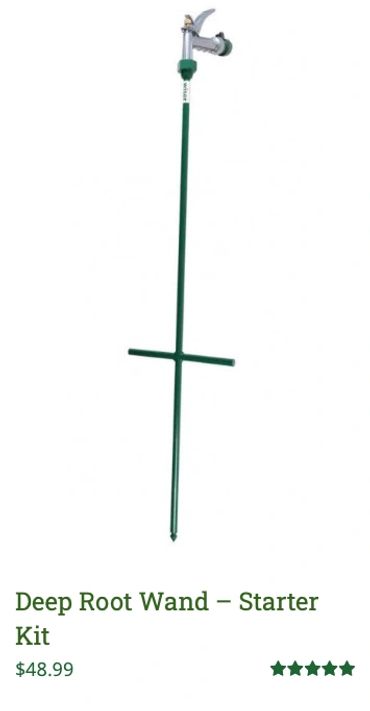
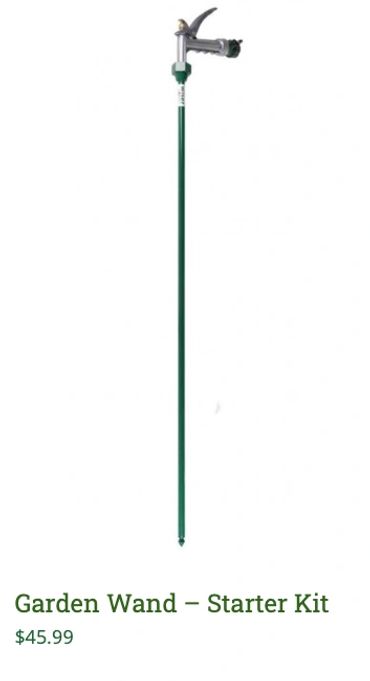
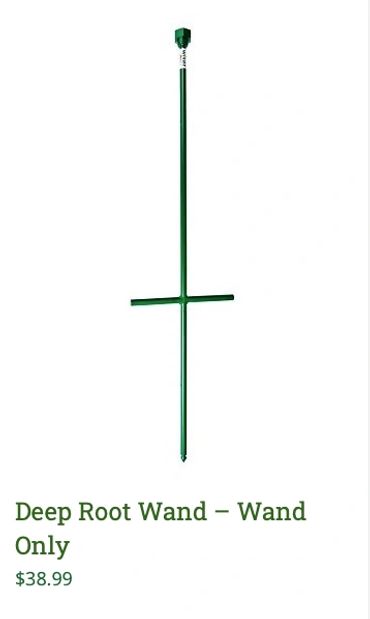
Some Treatment Options
Tuliptree Scale: A Perplexing Problem
This Tuliptree Scale treatment summary is not designed to provide a definitive how-to guide, but rather to illustrate various treatment options for magnolia trees affected by Tuliptree Scale infestation. We explore environmentally friendly approaches along with commercial chemical treatments that may have environmental side effects. Additionally, we provide approximate costs for the commercial treatments involved.
The Tuliptree Scale, which attacks our beautiful magnolia trees, is a type of soft-shell scale that tends to proliferate in late summer and early fall. One of the challenges in combating this pest is its method of attachment; it pierces the tree and feeds on its nutrients. As the scale reproduces, it leaves numerous individuals in different stages of development on the tree, making control efforts increasingly difficult.
Let’s examine more environmentally friendly controls for scale as part of magnolia tree care:
1. Deep water the tree.
1.1. Use the Corona Root Irrigator Model LG 3710, priced around $25.
1.2. Alternatively, set up an emitter tubing system like those offered by Rain Bird.
1.3. Consider using an emitter or bubbler system with Rain Bird’s Root Watering System.
1.4. For more information on Rain Bird products, see the PDF file below.
2. Wash the tree with a garden hose; it may provide some assistance.
3. Apply horticultural oils, such as Neem Oil, thoroughly covering the stems and leaves.
3.1. For more information on horticultural oils, refer to the PDF file below.
4. Spray the tree with insecticidal soap to combat the crawlers, though this may not impact mature adults.
4.1. For more information, visit https://www.thespruce.com/how-to-use-insecticidal-soap-1902893.
5. Check another how-to resource at https://www.thespruce.com/how-to-get-rid-of-scale-insects-1402693.
6. Manually scrape the scale off the tree using a knife or fingernail.
Now, let’s consider some chemical treatment options that a commercial tree pest control company might provide. The costs will vary based on the tree's diameter, the chosen treatment method, and the number of trees treated at once. To determine your tree size, measure its circumference about 4 feet off the ground and divide by 3.14 to find the diameter. Smaller diameters typically incur lower chemical application costs, while larger trees will be more expensive.
Here are four possible chemical treatment options with rough cost estimates:
1. **Soil Surface Treatment**: A chemical is placed in the soil for root absorption, requiring watering after application to ensure the tree absorbs it. When the scale feeds on the tree sap, the chemicals enter its system and kill it.
1.1. Cost is approximately $0.75 per inch of tree diameter.
1.2. Possible negative impacts include soil contamination and runoff to adjacent areas.
1.3. There may be potential harm to pollinators.
2. **Injection Treatment**: This method involves drilling holes around the tree base where chemicals are injected for absorption to target the scale as it consumes tree sap.
2.1. The cost is roughly $10 per inch of tree diameter.
2.2. A downside is that repeated applications may necessitate drilling multiple holes, which can compromise tree health.
3. **Overhead Spray Application**: This requires two treatments about two weeks apart. Rain may wash chemicals off before the tree is fully protected.
3.1. Costs vary based on tree diameter, ranging from approximately $80 to $300.
3.2. There may be negative impacts from air contamination and runoff into surrounding areas.
4. **Basal Application**: Coating the bottom 4 feet of the tree with a chemical that the tree then absorbs to combat the scale.
4.1. Cost is about $6 per inch of tree diameter.
4.2. Possible negative effects include contamination through runoff.
4.3. This method may also harm pollinators.
There’s no easy solution for eradicating Tuliptree Scale, but the City of Long Beach Public Works Department is expected to release an audit and report soon addressing this challenging issue.
Octagonal shape with text "POSSIBLE SOLUTIONS".

Are you missing a street tree?
It's Planting Time!
March 13th will mark our first AHIA Tree Planting day, where we will collaborate with our members to replace the lost Magnolias with new trees. These trees will be visually compatible with the remaining Magnolias while offering resistance to drought and disease. Our two selected options are the Brisbane Box Tree and Arbutus 'Marina'. (Scroll down to see the tree info)
If you would like to be added to the list for a new tree, please click the link below to provide us with your address. We are initially planning to plant 15 trees and will schedule additional planting dates if requests exceed that number.
We are also calling for volunteers from 8:30 AM to Noon to assist with the planting. Once we have the planting locations, we will coordinate with the volunteers. For homeowners, we will provide 'Best Practices' instructions for the newly planted trees, as proper magnolia tree care will be essential for their healthy growth. It will be the homeowner's responsibility to care for the trees as they establish themselves. All trees require ample water when young, particularly to combat issues like Tuliptree Scale infestation, and deep watering is recommended to encourage robust root systems that can withstand windy and dry conditions.